How to: Wolf whistle for fun and irritation

Eureka! It’s only taken 30 years, but I’m finally beginning to master the fingers-jammed-in-your-mouth method of whistling. Like many things, it’s all a matter of finding it explained the right way for you to get it. Fortunately, Thomas Baker (bluebones.net) archived the info when he came across it on the web, because it may have vanished otherwise.
You can either view the “How To Wolf Whistle” tutorial on his site, or continue reading. I’ve decided to include the information here mostly for my own reference. (I’m still practicing, after all.)
The very same disclaimer, I’ll just qualify that I know it came from bluebones.net:
Disclaimer: I didn’t write any of this I just copied it from the web somewhere. I can’t find the site again now so I thought I’d put the text I copied up. If this is your text and you’ve put your site back up again let me know and I’ll replace this with a link to your site
Intro: Before you begin
Method 1: Fingered whistle
Method 2: Fingerless whistle
Your fingers, washed (if you’re starting a practice session)
A mirror (optional)
Practice 5 minutes a day in the mirror, and you’ll have it in a few weeks (at the most)
Bevel: a sharply angled edge which air flows over and produces a tone. In the case of a whistle, the sound is created by the upper teeth and tongue forcing air on to the lower lip and teeth.
Sweet spot. the bevel’s area of maximum efficiency, where the air is blown directly over the sharpest part of the bevel. Once you locate the sweet spot, your whistle will have a strong, clear tone, as opposed to a breathy, low-volume sound.
Whistling is a funny skill: folks who can whistle, wonder how anyone could have a problem with it. Folks who can’t, wonder how anyone could ever produce such a sound. For those of you who can’t, consider learning–a quick, loud, penetrating whistle has many useful applications and can be mastered with relative ease. (Note: there’s nothing here on whistling Dixie or any other tuneful amusement.)
You’ll be shown two techniques for whistling: one that uses your fingers, and another that doesn’t. Say it’s raining, your arms are full of shopping bags, and you need to flag a taxi. This no-hands whistle will allow you to emerge victorious in this situation and others. But the fingerless whistle is a little trickier to master, so you should practice the fingered whistle first. Just practice a little bit every day; soon pets and taxis alike will be at your beck and call.
Familiarize yourself with the different parts of your mouth, and get a feel for how they work together. It’s mostly a matter of practicing whenever you get the chance: for example, walking a dog, applauding a live performance, or…flagging down a taxi.
If you can’t produce any sort of whistle at present, maybe just loud wheezing sounds, you may want to try the fingered whistle first. Some say it’s easier than the “no-hands” technique; others say they are equally easy (with practice.)
If you’ve set aside time to practice (highly recommended) then wash your hands first. It’s good to be picky about what you put inside your mouth.
Tuck away your lips
First, your upper and lower lips must reach over to cover your teeth and be tucked into your mouth. Only the outer edges of your lips are visible, if at all.
Choose your finger combination
The role of fingers is to keep the lips in place over the teeth. Experiment with the following combinations to discover which works best for you, depending on the size of your fingers and mouth. Regardless of your choice of fingers, their placement is the same: each are placed roughly halfway between the corners and center of lips, inserted to the first knuckle. (Again, this will vary depending on the size of your fingers and mouth.)
Your options are:
- a U-shape created with thumb and middle finger, or thumb and index finger, of either hand.
- right and left index fingers.
- right and left middle fingers.
- right and left pinkie fingers.
Now that your fingers are in place, be very clear on these two matters of form:
1.) Your fingernails should be angled inwards, towards the center of the tongue, and not pointed straight in and towards the back of your mouth; and 2.) your fingers should pull the lower lip fairly taut.
Draw back the tongue
Now comes the crucial part of the whistle.
The tongue must be drawn back so that its front tip almost touches the bottom of the mouth a short distance behind the lower gums (about 1/2 inch/1 cm). This action also broadens and flattens the front edge of the tongue, allowing it to cover a wider portion of the lower back teeth.
The sound is produced by air flowing over a bevel, or a sharply angled edge. In this case, the sound is created by the upper teeth and tongue directing air onto the lower lip and teeth.
Blow
Steps 3 and 4 follow each other very closely, if not simultaneously. Inhale deeply, and exhale over the top side of the tongue and lower lip, and out of your mouth. Some extra downward and outward pressure by the fingers onto the lips and teeth may be helpful. Experiment with the position of the fingers, the draw of the tongue, the angle of the jaw, and the strength of your exhalation. Adjusting with these will bring success.
Start off with a fairly gentle blow. You’ll produce a whistle of lower volume at first, but you’ll also have more breath to practice with if you don’t spend it all in the first three seconds. As you blow, adjust your fingers, tongue and jaws to find the bevel’s sweet spot. This is the area of maximum efficiency, where the air is blown directly over the sharpest part of the bevel. Once you locate the sweet spot, your whistle will have a strong, clear tone, as opposed to a breathy, low-volume sound.
Listen for these sounds: as you practice, your mouth will learn to focus the air onto the bevel’s sweet spot with increasing accuracy. You’ll probably hear the following: a breathy, low-volume tone that suddenly, as you adjust your fingers, mouth, or jaw, will switch to a clear, full, high-volume tone. Success! You’re on the right track–your task now is to reproduce the mouth and hand position that led to the better whistle.
The fingerless whistle is a natural outgrowth of the fingered whistle. In the first method, you use your fingers to keep the lip taut and in place. With the next method, you remove your fingers and don’t use them at all (except to cross them for good luck). Instead of using your fingers, you rely on your muscles in your lips, cheeks, and jaw. Since this technique requires greater control of those muscles, it may be easier to master the fingered whistle first, and then move on to the fingerless method.
Draw back lips
Begin by extending the lower jaw slightly, and pulling the corners of your mouth back a bit, towards your ears. Your bottom teeth should not be visible, but it’s fine if your upper teeth are.
Your bottom lip should be quite taut against the lower teeth; if you have need help with this movement, press an index and middle fingertip on either side of the mouth to draw the lip slightly out to the corners. Note: this action is not an insertion of the fingers into the mouth, as the first method indicated. In this instance, you’re simply stretching the lower lip a bit, and the fingertips aren’t in the airstream.
Draw back the tongue
Now comes the crucial part of the whistle.
The tongue must be drawn back so that it sort of floats in the mouth at the level of the lower front teeth. This action also broadens and flattens the front edge of the tongue, yet there’s still a space between the tongue and the lower front teeth.
The sound of the whistle comes from air that is blown over a bevel, or a sharply angled edge. In this case, the sound is created by the upper teeth and tongue forcing air on to the lower lip and teeth.
Blow
Steps 2 and 3 follow each other very closely, if not simultaneously.
Inhale deeply and exhale–the air should flow under your tongue, up through the space between the tongue and teeth, and out of the mouth. Experiment with the position of the fingers, the draw of the tongue, the angle of the jaw, and the strength of your exhalation.
Start off with a fairly gentle blow. You’ll produce a whistle of lower volume, but you’ll also have more breath to practice with if you don’t spend it all in the first three seconds.
Using your upper lip and teeth, direct the air downwards and towards your lower teeth. The focus of the air is crucial for this technique–you should be able to feel the air on the underside of your tongue. And if your hold your finger below your lower lip, you should feel the downward thrust of air when you exhale.
As you blow, adjust your tongue and jaws to find the sweet spot. This is the area of maximum efficiency, where the air is blown directly over the sharpest part of the bevel. This results in a strong, clear tone that’s constant, as opposed to a breathy, lower-volume sound that fades in and out.
Listen for the following: the sound you’ll start with will sound as if you’re letting air out of a tire. Every now and then, the clear and full tone will come through, and you’ll know that it’s only a matter of time before you’re hailing every pet and taxi in your community.
about mister jason™
A post-hardcore rock-n-roller, graphic designer, amateur chef, typography nerd, coffee connoisseur, radio guy, motorcyclist, skateboard commuter, and a reluctant adult. He lives in Portland Ore. USA with the lovely Dr. Adrienne and Otto T. Dog.
More like this
Adverts from London pirate radio 1984-1993
Radio and rave nostalgia with a cherry-picked volley of adverts from London pirate radio 1984-1993...
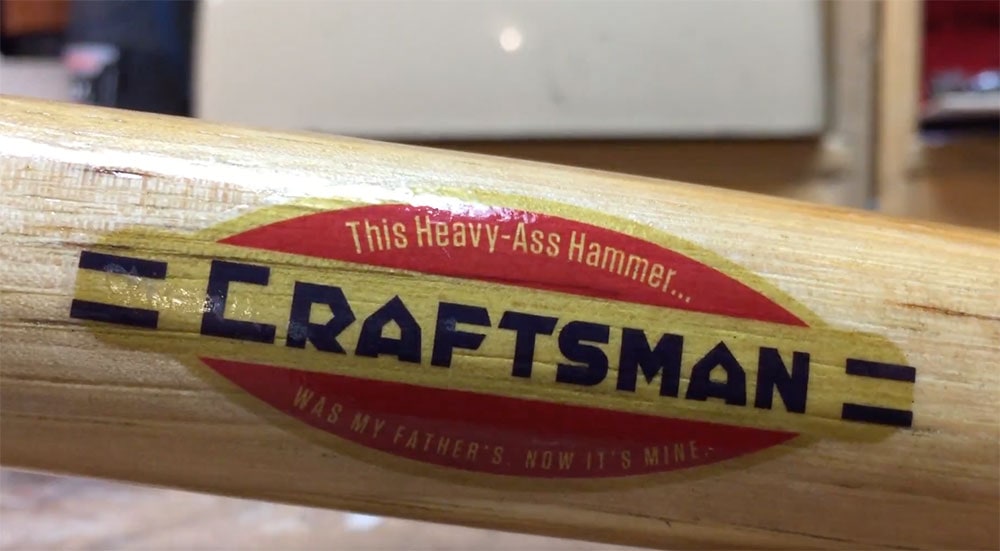
In the Shop: Refinishing and relabeling an old gift hammer.
I've been hanging up more of my hand tools lately and this thing was looking tired. I gave it a new label and some refinishing so it can be a...